
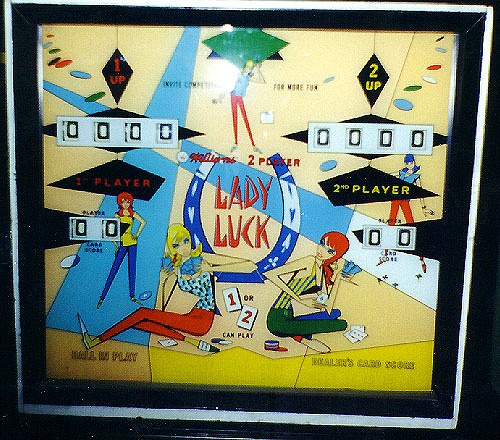
Lady Luck, released by Williams in 1968, stands as a quintessential example of Norm Clark’s mastery over the electro-mechanical era. With art by Louis Raynaud, this two-player machine leans heavily into the high-stakes aesthetic of the casino floor, transforming the playfield into a strategic game of blackjack. It eschews the digital flash of modern tables for the satisfying mechanical clatter of reel-based scoring, offering a tactile experience that demands precision rather than sheer speed.
The layout is deceptively simple, featuring a pair of flippers and four pop bumpers that provide the erratic, high-energy bounces necessary for navigating the card-themed objectives. The game is defined by its clever use of two kick-out holes and a central standup target, which work in tandem to simulate the tension of a card draw. A standout feature is the inclusion of an “action ring” and a right outlane ball return gate, a thoughtful inclusion that offers players a rare second chance at life when a seemingly lost ball threatens to end their hand prematurely.
Mastering Lady Luck requires a disciplined approach to the playfield’s geometry. Savvy players should prioritize the rollover buttons to build their bonus potential before committing to the kick-out holes, as the game’s scoring is heavily weighted toward hitting those specific targets in sequence. It is a machine that rewards patience and steady aim; much like the gambling theme it portrays, the key to a high score is knowing when to play it safe and when to capitalize on the unpredictable movement of the pop bumpers to keep the ball in play.