
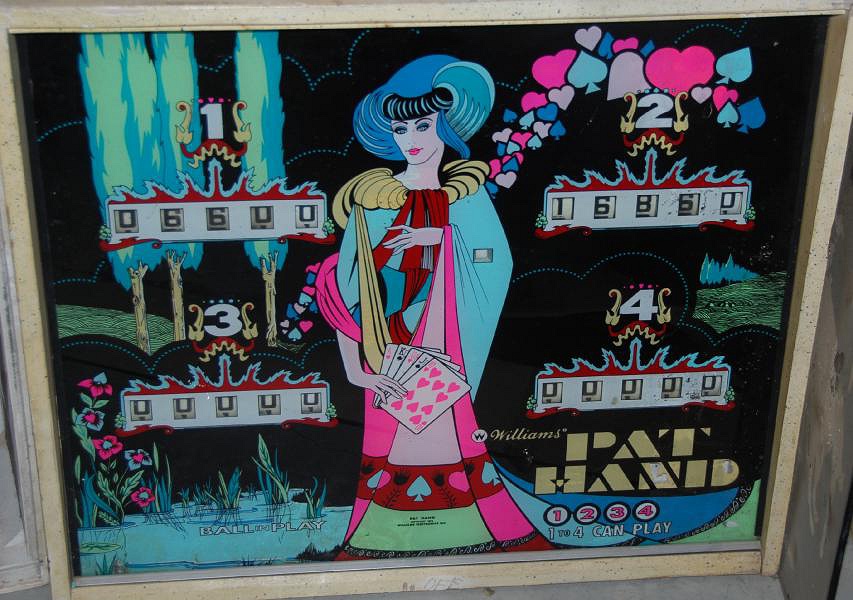
Pat Hand, released by Williams in 1975, remains a quintessential example of Norm Clark’s design prowess during the golden age of electromechanical machines. With art by the iconic Christian Marche, the game leans heavily into its gambling aesthetic, tasking players with chasing high-stakes scoring through a deck-themed layout. It is a deceptively simple four-player affair that demands precision, utilizing a three-flipper configuration to navigate a field densely populated with fifteen rollover buttons and nine standup targets.
The gameplay experience is defined by its flow and the tactical use of that third, upper flipper. Rather than relying on flashy toys, Pat Hand rewards the disciplined player who can master the loop; a reliable strategy involves using the upper flipper to navigate orbits that feed back into the upper playfield area, keeping the ball away from the treacherous lower sections. Players should be wary of the dreaded “scissor” drain on the right side and use that upper flipper early in the ball’s trajectory to maintain control. When the action descends into the lower pop bumper area, holding the left flipper up acts as a vital defensive measure against a sudden, game-ending drain.
Under the hood, the machine’s scoring depth is found in its rollover sequences. Successfully hitting the five central rollover buttons twice is the key to unlocking the double bonus, a necessary feat for anyone chasing a high score on the classic reel displays. With 6,500 units produced, Pat Hand is a staple of the EM era, offering a satisfying, rhythmic challenge that perfectly captures the tension of a high-stakes card game translated into the mechanical language of vintage pinball.