
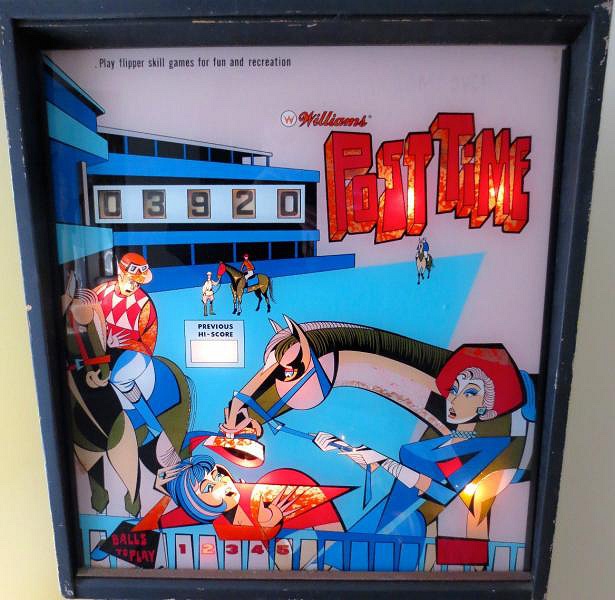
Post Time, the 1964 classic from Williams, stands as a quintessential example of Norm Clark’s mastery over the add-a-ball era. Sporting vibrant, frantic artwork by Christian Marche that captures the pulse of the racetrack, this single-player machine leans heavily into its horse racing theme. Unlike the standard replay-heavy machines of its time, Post Time is built for extended play sessions, rewarding the persistent player with extra balls rather than credits. With a dense, active playfield packed with five pop bumpers and four slingshots, the game demands precision to keep the ball dancing in the upper reaches of the table.
Gameplay on Post Time is all about momentum and board control. The most effective strategy involves a deliberate plunge through the center lane to reach the upper playfield, where the primary objective is to illuminate the full array of pop bumpers. Mastering the upper section is crucial; by skillfully navigating the tracks and advancing three times, you trigger a ball save feature that can significantly extend your run. It is a deceptively simple loop that forces you to balance aggressive shot-making with the defensive discipline required to keep the ball from draining back to the lower flippers.
With over 2,000 units produced, Post Time remains a highly sought-after piece of electromechanical history. It eschews the complexity of modern multi-ball modes for a pure, rhythmic experience that feels like a sprint to the finish line. For those who appreciate the tactile feedback of reel-based scoring and the high-stakes pressure of an add-a-ball challenge, Clark’s design remains a masterclass in pacing, proving that even a simple trip to the track can provide an adrenaline-fueled thrill that holds up decades later.