
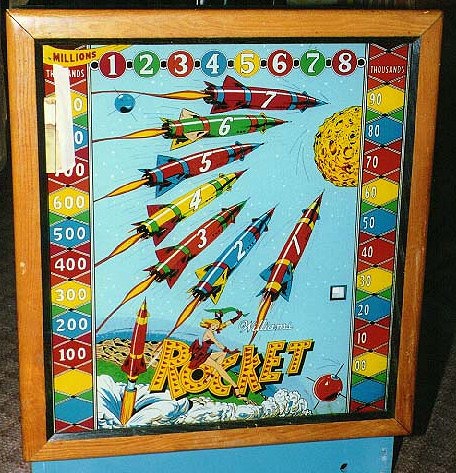
Williams’ Rocket stands as a quintessential artifact from the golden age of electromechanical design, bearing the unmistakable fingerprints of industry legend Harry Williams. Released during an era when the space race had captured the collective imagination of the public, this single-player title leans into the primitive, high-stakes charm of early outer space themes. With George Molentin providing the stark, evocative art, the machine captures the mid-century optimism of pioneering the cosmos, stripped of the complex digital gimmicks that would define the decades to follow.
The gameplay is defined by its brutal simplicity and the classic “five balls for a nickel” pricing structure that once dominated the arcade landscape. Without the safety nets of modern ball saves or deep rule sets, success on Rocket relies entirely on the player’s ability to master the geometry of the playfield and the timing of the flippers. It is a game of pure, kinetic feedback, where the satisfaction comes from landing clean shots into the scoring lanes and navigating the playfield’s layout to maximize your score before the final ball drains.
For those looking to conquer this vintage classic, the key is consistency in the plunge and disciplined shot selection. Because the machine lacks the multi-level complexity of later eras, your primary strategy should focus on identifying the highest-value targets and maintaining ball control to avoid the treacherous side drains. Rocket is not just a game; it is a historical document that reminds us why the simple, tactile joy of a steel ball hitting a target remains the bedrock of the entire pinball hobby.