
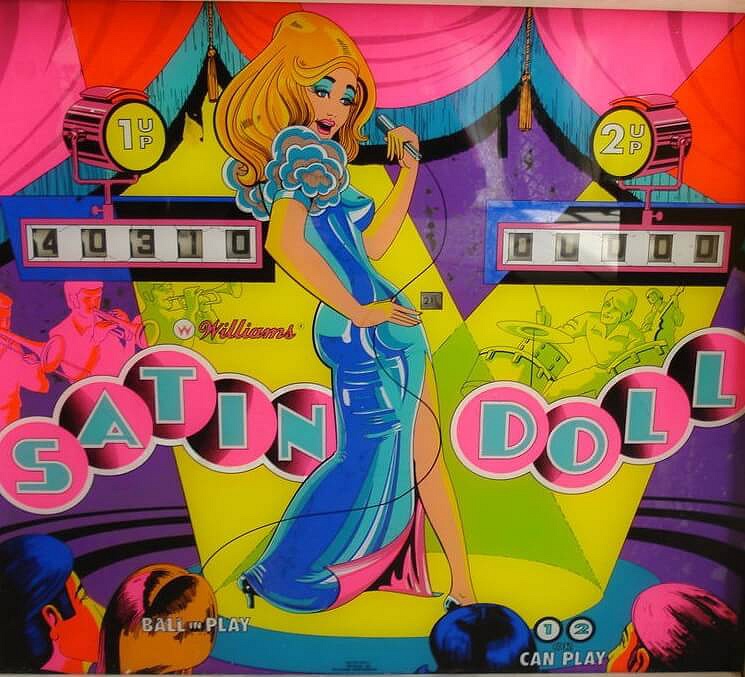
Satin Doll, the 1975 release from Williams, is a quintessential slice of mid-70s electro-mechanical charm designed by industry legend Norm Clark. Featuring the unmistakable, stylized artwork of Christian Marche, the machine leans into a jazzy, musical theme that feels both sophisticated and deceptively simple. With four flippers at your disposal, the playfield is built for precision rather than brute force, tasking players with navigating a dense spread of fifteen rollover buttons and nine standup targets. It’s a classic two-player experience that relies on rhythm and tactical placement rather than the flashy, modern toys of today.
The gameplay centers on mastering the upper flipper, which acts as the game’s primary tactical tool. The most reliable path to a high score involves using this upper flipper to loop the ball through the orbits, feeding it back into the upper flipper’s reach for a controlled, repetitive cycle. While the center rollover buttons offer the enticing reward of double bonuses once you’ve cleared the bank twice, players must remain vigilant against the notoriously unforgiving right-side scissor drain.
For those looking to survive a session on Satin Doll, defensive play is paramount. If the action gets chaotic in the lower pop bumper area, holding the left flipper up is a necessary maneuver to guard against a sudden, swift drain. Furthermore, timing your upper flipper shots is critical; firing too early can easily send your ball careening into the right outlane, ending a promising run prematurely. It is a game of finesse, rewarding the patient player who learns to treat the playfield as a delicate instrument rather than a battleground.