
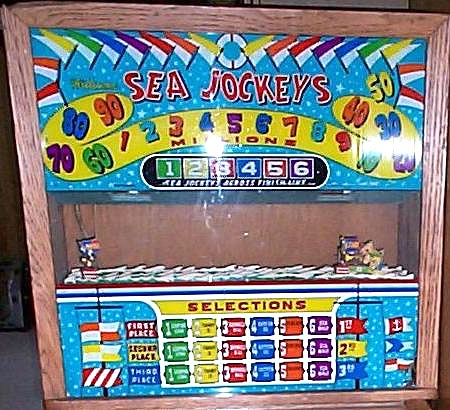
Sea Jockeys, released by Williams in 1951, stands as a quintessential artifact from the golden age of electromechanical design. Masterminded by the legendary Harry Williams and featuring the distinct aesthetic sensibilities of artist George Molentin, this single-player machine eschews modern complexity for a pure, rhythmic experience centered on the burgeoning post-war fascination with water sports. The cabinet is defined by its mechanical backbox animation, a hallmark of the era that provided players with a sense of kinetic drama long before digital displays took over the industry.
The gameplay is refreshingly straightforward, designed around the classic “five balls for a nickel” model that kept arcade floors bustling throughout the fifties. Without the clutter of modern multiballs or deep rule sets, success on Sea Jockeys relies entirely on precision and timing, forcing the player to master the playfield’s geometry to rack up points. It is a testament to the era’s design philosophy: simple, tactile, and rewarding, offering a glimpse into a time when the physical interaction between ball and playfield was the sole focus of the hobby.