
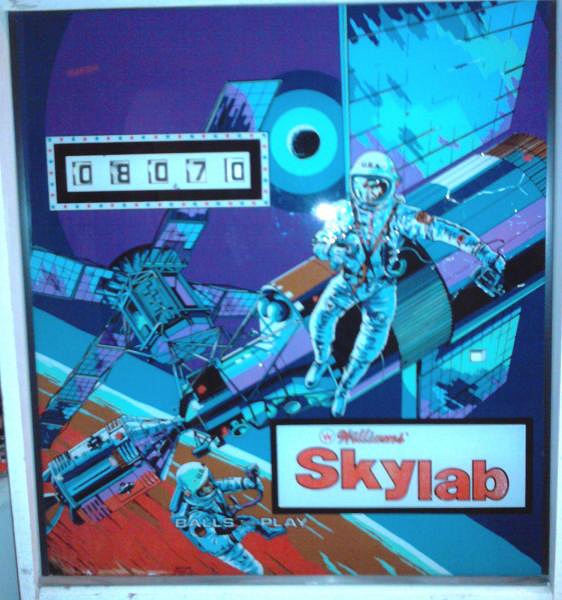
Skylab, released by Williams in 1974, stands as a quintessential Electromechanical (EM) relic of the Space Race era. Designed by the legendary Steve Kordek, this single-player machine leans into the aesthetic of NASA’s first space station, featuring striking cabinet and playfield art by Christian Marche that captures the optimism of 1970s orbital exploration. Unlike the complex, multi-level playfields of the modern era, Skylab relies on the raw, tactile satisfaction of traditional EM components, utilizing a straightforward two-flipper layout that demands precision over spectacle.
The heart of the playfield is defined by its five captive balls, which serve as the primary targets for the player to manipulate. By strategically striking these balls, players attempt to navigate the board’s pop bumpers and slingshots to rack up high scores on the classic mechanical reels. While it lacks the digital flair of current-gen tables, the game’s charm lies in its simplicity and the rhythmic “thwack” of the relays firing behind the backglass. It is a masterclass in Kordek’s minimalist approach, proving that you don’t need a deep ruleset to create a compelling, high-stakes experience.
For those looking to master Skylab, the key is consistency in targeting the captive ball array to maximize bonuses before the ball inevitably drains. Because the machine was produced in a limited run of just over 3,600 units, it has become a sought-after piece for collectors who appreciate the history of early space-themed pinball. It remains a stark, elegant reminder of a time when the pinnacle of technology was represented by a metal sphere bouncing through a field of switches and solenoids.