
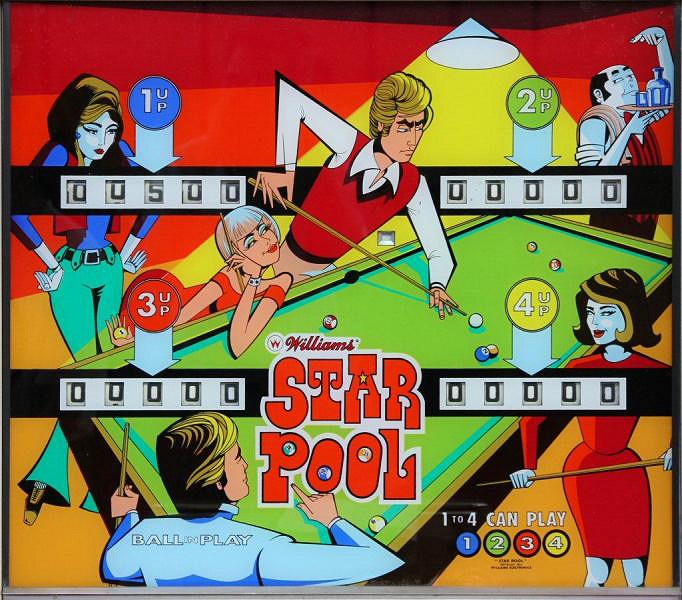
Star Pool, released by Williams in 1974, stands as a quintessential example of Steve Kordek’s mastery of the classic electromechanical era. With artwork by Christian Marche, the game leans heavily into its billiards theme, utilizing a deceptively simple layout that prioritizes finesse over flash. The machine centers on a pair of flippers and a strategic array of four drop targets, which serve as the primary gateway to boosting your score. The playfield is peppered with pop bumpers and rollover buttons, but the true mechanical character is found in the spinning posts, which demand precise aim to maximize their rotation and, consequently, your point output.
To conquer this table, you must embrace the mantra that this is a game of pure bonus accumulation. Success hinges on clearing the A-B-C-D drop target bank; knocking down all four targets unlocks the double bonus, a vital multiplier for any high-score run. While the C and D targets are manageable shots for a seasoned player, the A and B targets often require a bit of luck and a heavy dose of patience. Savvy players should also focus on the left lane, as it serves as the engine for advancing the spinner value. By cycling the ball through this lane and timing your strikes against the spinning posts when they are positioned wide, you can effectively milk the machine for every point available.
With nearly 7,000 units produced, Star Pool remains a staple of the golden age of arcade history. It lacks the modern complexity of ramps and multiballs, but it compensates with a rhythmic, satisfying flow that rewards fundamental flipper skills and disciplined target management. The inclusion of a right outlane ball return gate adds a touch of mercy to an otherwise unforgiving design, allowing players to stay in the game long enough to chase that elusive double bonus. It is a sleek, focused tribute to the pool hall aesthetic that proves once and for all that, in the world of pinball, simplicity is the ultimate sophistication.