
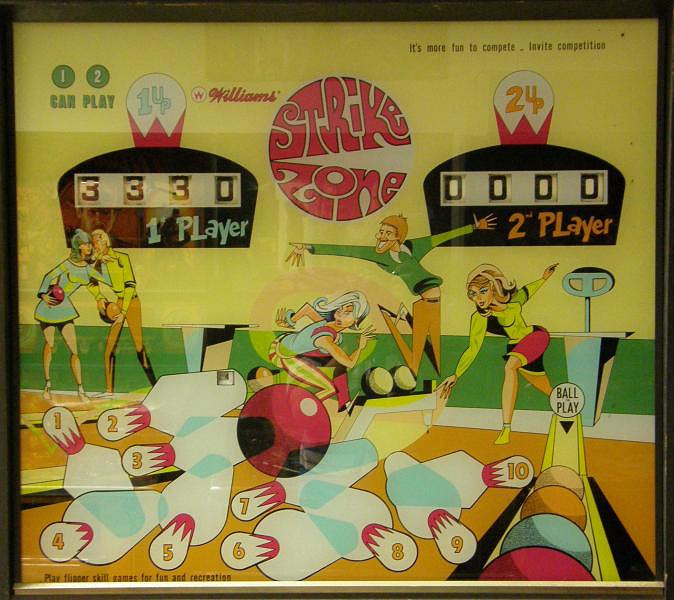
Strike Zone, released by Williams in 1975, is a quintessential Norm Clark design that captures the tactile, rhythmic satisfaction of a night at the bowling alley. Featuring iconic, stylized artwork from Christian Marche, the cabinet leans into a bold, mid-70s aesthetic that mirrors the high-energy atmosphere of the lanes. While it lacks the complex digital sub-systems of later eras, its electromechanical charm is driven by a straightforward but aggressive playfield layout, utilizing four pop bumpers and four slingshots to keep the ball in constant, chaotic motion.
The machine’s mechanical personality is defined by its classic EM architecture, relying on reel-based scoring to track your progress toward a perfect game. A standout feature is the up-post situated directly between the flippers, a common but vital addition in Clark’s designs that allows a skilled player to cradle the ball or save an otherwise doomed center-drain. With a right outlane ball return gate providing a second chance at glory, the game rewards players who can master the momentum of the bumpers and accurately target the four standup targets to rack up strikes and spares.
For tournament players or casual collectors, the secret to success on Strike Zone lies in managing the high-traffic zones created by the four pop bumpers. Because the table is relatively open, the ball can accelerate quickly; patience is required to utilize the center post effectively rather than panic-flipping. It is a masterclass in minimalist design, proving that you don’t need a deep ruleset to replicate the tension of a bowling match—just a sharp eye, a steady hand, and the relentless vibration of a vintage Williams relay bank.