
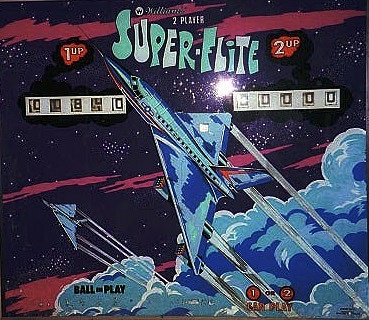
Super-Flite, released by Williams in 1974, stands as a quintessential example of Norm Clark’s mastery of the classic electromechanical era. With artwork by the legendary Christian Marche, the machine leans heavily into a high-flying aviation theme that captures the mid-70s aesthetic of commercial jet-setting. Under the hood, this two-player cabinet relies on traditional mechanical score reels to track your progress as you pilot your way through a flight-inspired playfield.
The mechanical layout is deceptively straightforward, utilizing a pair of flippers to navigate a landscape populated by a trio of pop bumpers and a crucial kick-out hole. A standout design choice is the inclusion of an upper return ball gate, which adds a layer of flow and unpredictability to the game’s geometry. The gameplay loop centers on precision target management; players must focus on clearing the A, B, C, or D target banks to climb the ladder toward double and triple bonus multipliers.
While modern players might be accustomed to digital displays and deep rulesets, Super-Flite demands an appreciation for the tactile feedback of an EM machine. With only 1,901 units produced, it has become a sought-after piece for collectors who value the clean, fast-paced challenge of a well-maintained Clark design. Successfully chaining your shots through the target banks is the only way to achieve a high-scoring flight, making every press of the flipper button a test of timing and target discipline.