
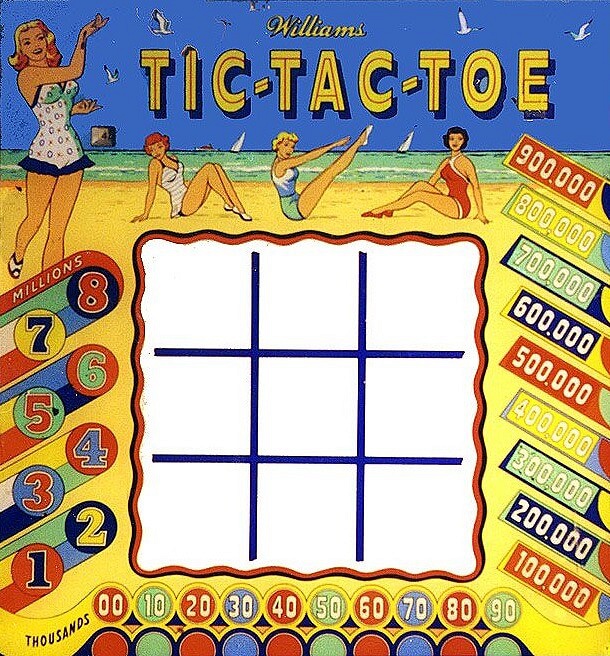
Tic-Tac-Toe, a 1954 classic from Williams, stands as a charming relic of the early electro-mechanical era, reflecting the playful, sun-drenched aesthetic of mid-century boardwalk arcades. Designed by the legendary Harry Williams with vibrant, breezy artwork by George Molentin, the machine leans into a whimsical beach and sailing theme, grounding its gameplay in the simple, universal appeal of the titular pen-and-paper game. It is a stark, nostalgic reminder of a time when pinball was as much about light-up logic as it was about physical reflexes.
Operating on a standard five-ball format, the machine eschews the complex multiballs and motorized gimmicks of modern tables in favor of pure, rhythmic scoring. The playfield is a study in minimalist design, focusing on the satisfaction of hitting specific targets to fill the board and conquer the grid. Because the game relies entirely on lamp-based displays to track progress, players must develop a keen eye for the playfield’s logic, prioritizing accuracy to light up the necessary patterns before their ball count runs dry.
For those looking to master this vintage gem, the strategy is as straightforward as the game itself: focus on consistency rather than power. In an era before sophisticated ball saves or deep rule sets, managing the five-ball progression is paramount. A successful session on Tic-Tac-Toe requires a tactical approach to the playfield geometry, ensuring that each shot contributes to completing the grid sequences. It is a quintessential Williams experience—uncomplicated, visually evocative, and a masterclass in how to turn a simple concept into a compelling, repeatable challenge.