
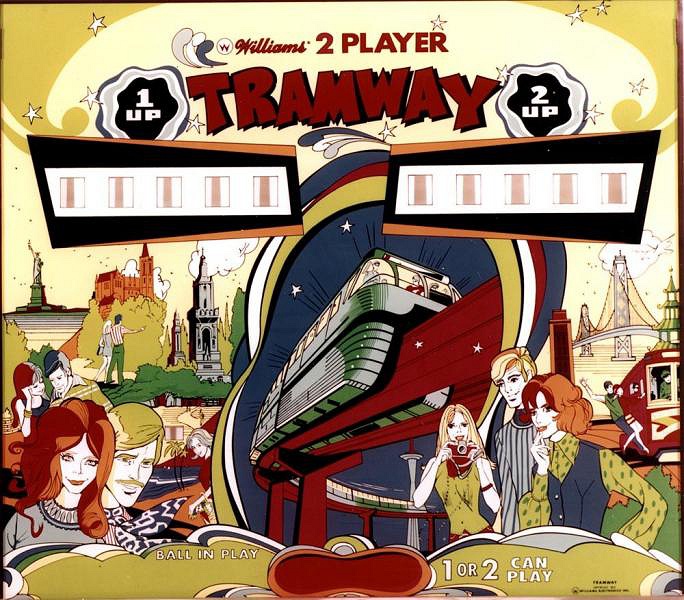
Williams’ 1950s-era classic, Tramway, serves as a quintessential snapshot of mid-century electromechanical design, capturing the charm of urban transit in a compact, two-player package. Eschewing the complex ramp structures and digital displays of the modern era, this machine relies on the rhythmic clacking of its score reels and the tactile satisfaction of a purely analog playfield. The game centers on a transportation theme that feels right at home in the golden age of Williams, where the focus was less on cinematic spectacle and more on the pure, geometric challenge of nudging and precise flipper control.
The layout is deceptively simple but demands a disciplined approach to ball management. With a pair of flippers and two pop bumpers, the playfield is designed to keep the action flowing toward the three strategically placed kick-out holes. A standout feature for the era is the center up-post situated between the flippers; savvy players utilize this to save a ball heading straight down the middle, turning a potential drain into a second chance at scoring. The inclusion of a right outlane ball return gate also offers a slight reprieve, rewarding players who can navigate the ball back into play rather than letting it succumb to the gravity of the outlane.
For those looking to conquer this vintage transit system, the strategy is rooted in board control and target accuracy. Because the machine lacks the heavy multiball chaos of modern pins, success is measured by your ability to consistently hit the trio of standup targets and cycle the ball through the kick-out holes to maximize your score. Managing the ball’s momentum is critical; since there are no magnets or diverters to assist you, the game becomes a test of pure mechanical intuition. Tramway stands as a testament to a simpler time in arcade history, offering a refined, challenging experience for any collector who appreciates the enduring legacy of Williams EM machines.