
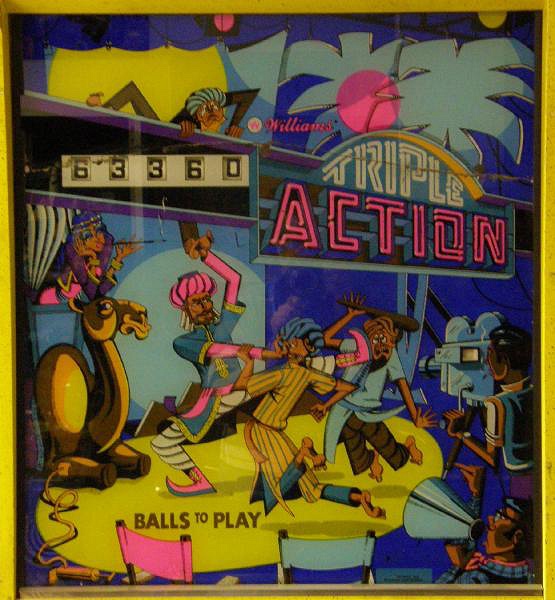
Triple Action, released by Williams in 1974, stands as a quintessential example of Steve Kordek’s mastery of the electromechanical era. Featuring vibrant, high-energy cabinet art by Christian Marche, the machine leans into a classic “Show Business” theme that feels like a neon-lit stage production squeezed onto a playfield. Despite its straightforward layout, the game relies on a tight, rhythmic flow driven by three pop bumpers and two active slingshots, demanding precision to navigate the board’s geometry.
The mechanical heart of Triple Action revolves around its four drop targets, which serve as the primary objective for those chasing high scores. Seasoned players know that clearing this bank twice is the golden path to securing an extra ball or a hefty 10,000-point bonus. While the game encourages aggressive orbit shots for steady point accumulation, savvy operators can bypass the spinning posts by focusing on the top rollover lanes, which spot the turntable targets automatically.
With nearly 4,000 units produced, Triple Action remains a staple for collectors who appreciate the tactile satisfaction of reel-based scoring and the uncluttered, challenging design philosophy that Kordek championed. It is a game that rewards patience and consistent aim; if you can master the drop-target cycle and keep the ball cycling through the upper lanes, the machine’s simple, punchy mechanics provide a rewarding experience that defines the golden age of Williams arcade design.