
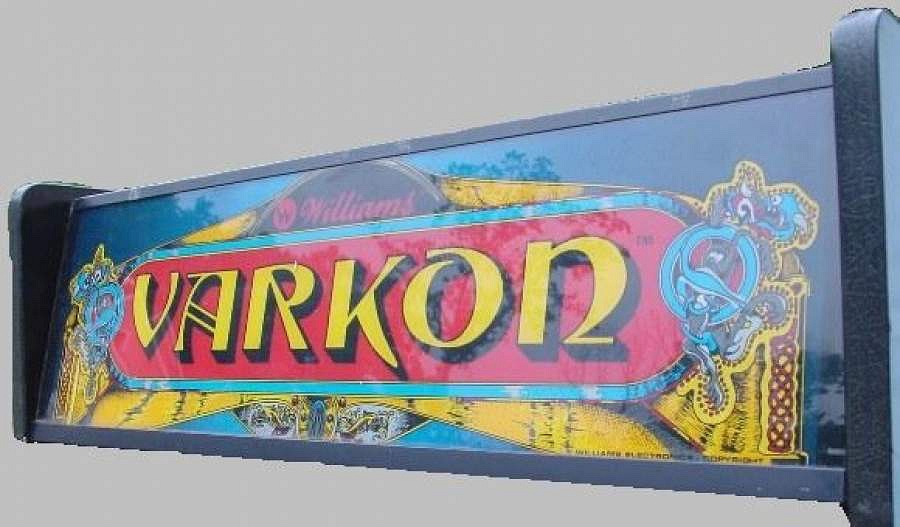
Varkon, released by Williams in 1982, stands as one of the most enigmatic oddities in the history of the hobby. Designed by Tony Kraemer, this two-player solid-state machine is a masterclass in deception, famously masquerading as a standard video arcade cabinet. While it occupies the footprint of a traditional upright video game, peering inside reveals a fully functional, albeit cramped, pinball playfield. With only 90 units confirmed to have left the factory, Varkon is an elusive “holy grail” for collectors who prize unconventional engineering over traditional cabinet aesthetics.
The design philosophy behind Varkon is a bold, experimental pivot from the standard pinball experience. By housing the mechanical action within a vertical, video-game-style enclosure, Williams challenged the spatial norms of the era. The game utilizes an alphanumeric display to track scoring, maintaining the visual language of early 80s arcade titles while delivering the tactile, kinetic satisfaction of steel hitting wood and metal. Its fantasy-themed art, crafted by Seamus McLaughlin, leans into the surreal nature of the machine, creating an atmosphere that feels more like a hidden experiment than a mass-market product.
Mastering Varkon requires a departure from the wide-open sightlines of contemporary tables. Because the playfield is restricted by the constraints of the video cabinet, players must rely on precise, tight-angle shots and an intimate understanding of the machine’s unique geometry. There is no room for error or sprawling combos; success here is found in the rhythmic, claustrophobic flow of the ball. It remains a fascinating relic—a literal “wolf in sheep’s clothing” that serves as a vital reminder of how far manufacturers were willing to push the boundaries of what a pinball machine could be.