
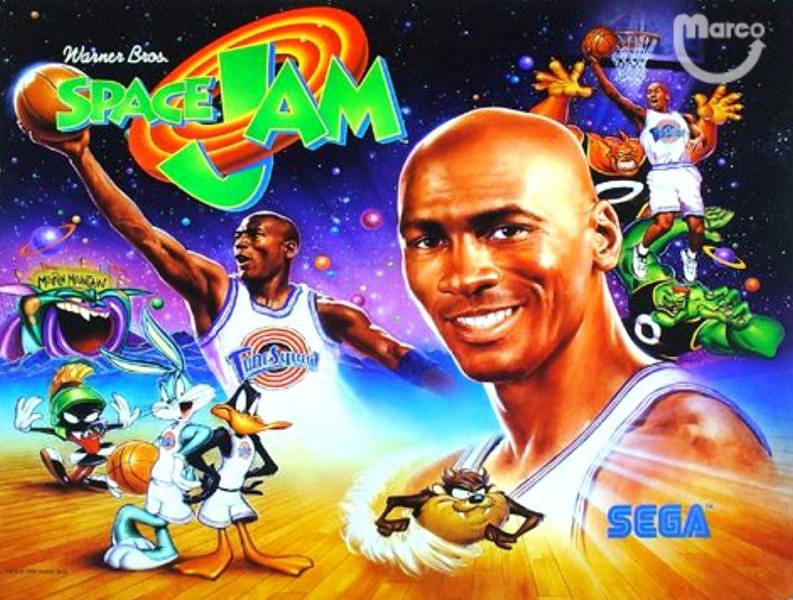
Space Jam, released by Sega in 1996, is a high-octane basketball fever dream that brings the Looney Tunes and Michael Jordan to the pinball arena. Designed by industry titans Joe Balcer and Joe Kaminkow, the machine captures the frantic, cartoonish energy of the cult-classic film. With its fast-paced playfield and iconic license, the table serves as a bizarre yet compelling time capsule of 90s pop culture, leaning heavily into the “sports-meets-animation” aesthetic that defined the era’s arcade landscape.
The gameplay centers on the exhilaration of the court, tasking players with hitting the “Wabbit Hole” to trigger mystery awards and climb through various modes. To light this crucial target, you must surgically aim for the “2” and “3” standup targets flanking the right ramp. The real test of skill, however, lies in the Super Skill Shot: players must execute a precision plunge followed immediately by a clean sweep of the left ramp to net a double-basket combo. Multiball is the ultimate goal, requiring three successful shots into the jump ball mechanism; once activated, the chaos unfolds, though players should remain vigilant, as the ball returns from the lock can be notoriously volatile and unforgiving.
Under the hood, the machine features the classic dot-matrix display and six-player capability that Sega tables of the mid-90s were known for. The sound design, helmed by Brian Schmidt, keeps the tempo high, mirroring the relentless pace of a basketball game. While it may be a polarizing title for some, Space Jam remains a quintessential example of Sega’s willingness to experiment with licensed themes, offering a demanding, rhythm-based experience that rewards players who can handle the pressure of the shot clock.