
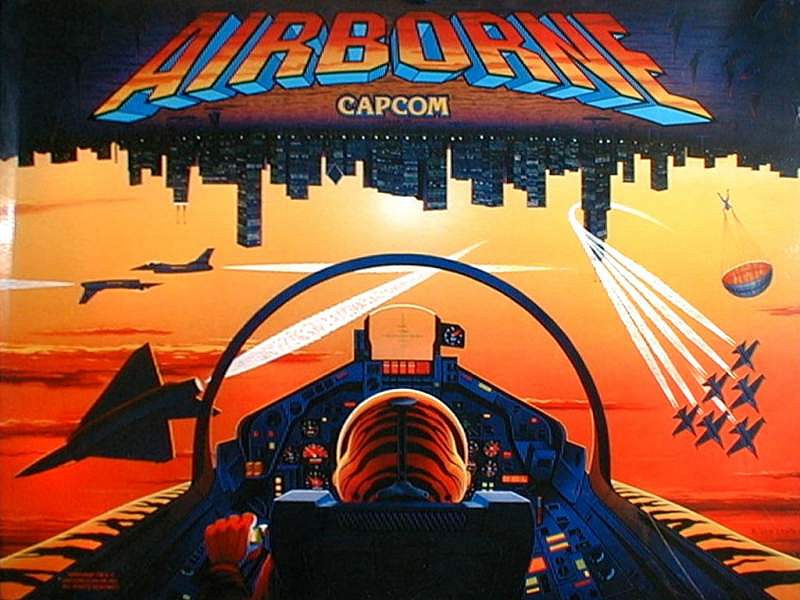
Clear for takeoff — Capcom’s 1996 Airborne is an aviation-themed flyer that crams an almost dizzying tangle of ramps and habitrails into its frame, and at its center sits the star mechanism: the Injector, a clever pusher at the top of the ramp system that helps choose your ball’s flight path. Designed by Claude Fernandez with art by Hugh Van Zanten and a Chris Granner score, this confirmed run of 1,350 is another scarce Capcom curiosity from the brief, ambitious life of that pinball division. There’s even an airport tower you can buzz with a well-aimed ball.
The flying is about commitment and timing. Plunge hard to reach the top area, and when the ball arrives at the three lanes, slap both flippers to fire that pushing mechanism and drop a lock into the center lane — a genuinely novel bit of player interaction. Qualify a lock and the left outlane lights for the stash, turning a usual drain hazard into an asset. From there, the air shows drive the scoring: each mode calls out the shots it wants, and since every one runs on a timer, the briskest pilots win. Generous operators could even allow up to ninety-nine buy-in balls per player, the kind of setting that turned a good night at the arcade into a marathon.
Airborne never achieved the fame of the bigger licensed juggernauts of its day, but that’s part of its charm — it’s an inventive, mechanically playful machine from a company swinging boldly during pinball’s mid-’90s renaissance. Master the Injector, race the mode timers, and keep that left outlane working for you. The skies are wide open.