
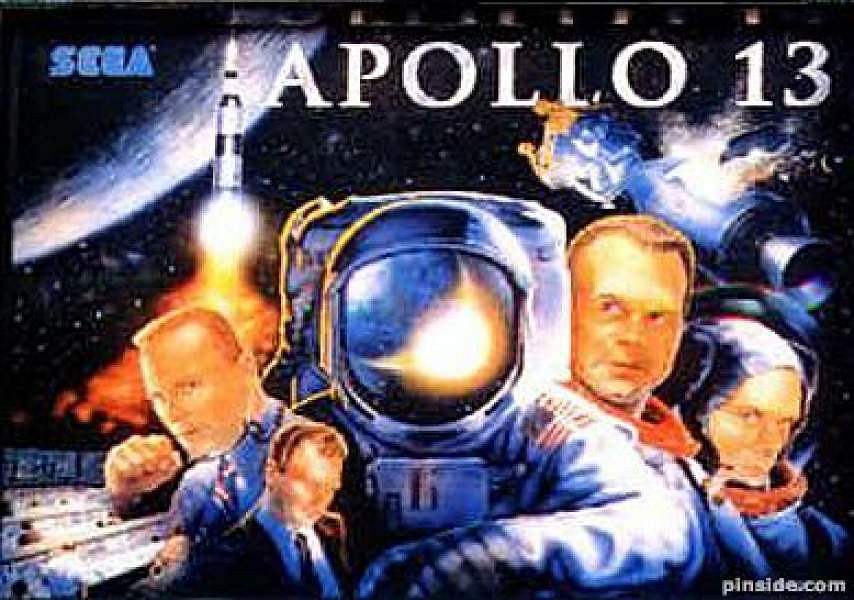
Houston, we have a multiball — Sega’s 1995 Apollo 13 is a space-disaster epic that holds a genuine record in the pinball world: a jaw-dropping thirteen-ball multiball, the largest of any machine ever made. Designed by Joe Kaminkow and Joe Balcer with a Brian Schmidt score, this six-player DMD machine features a moving rocket you shoot pinballs into, and it turns the harrowing true story of the ill-fated moon mission into an unforgettable, ball-flinging spectacle.
The strategy revolves around that record-breaking multiball and the machine’s clever scoring. Unless more than three BLASTOFF letters are already lit, starting the thirteen-ball Blastoff should be your immediate priority — it’s the signature thrill and the biggest scoring opportunity on the machine. If the rocket lock for the countdown is a safe shot, multiball all day becomes a repeatable and useful strategy. Voltage scoring pays off handsomely when you deliberately target the shots that aren’t flashing, a counterintuitive wrinkle that rewards a thoughtful player, and the Apollo 13 modes — Undervolt, CO2, and Rocket 2 Ball among them — all offer their own useful paths to points.
Apollo 13 is a spectacular, crowd-pleasing Sega that leans all the way into its record-setting gimmick, delivering a chaos of thirteen silverballs that no other machine can match. The dramatic true story gives it real weight, and that moving rocket is a memorable centerpiece. For the collector who loves a machine with a genuine claim to fame, it’s a must. Light your BLASTOFF letters, unleash all thirteen balls, and ride the voltage to a monster score. Failure is not an option, and neither is walking away from that legendary multiball. Blast off.