
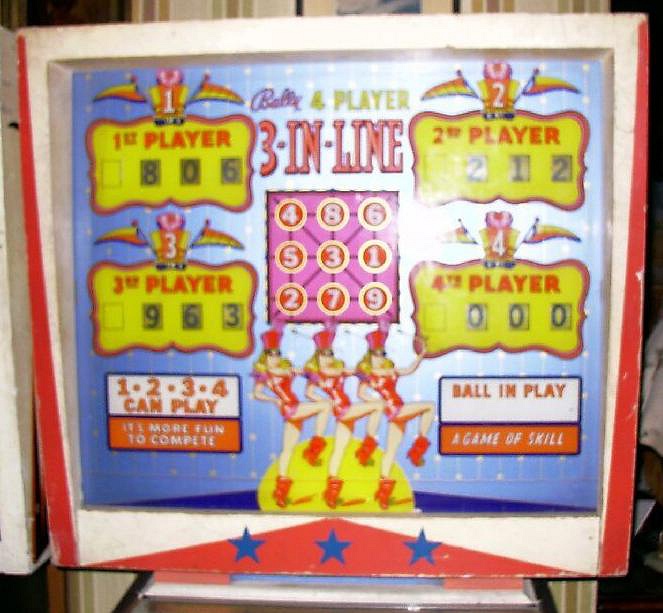
Here’s a charming relic from pinball’s electromechanical golden age — Bally’s 3-In-Line, a reel-scoring four-player designed by the prolific Ted Zale, whose name graces so many Bally machines of the era. Dressed in a cheerful majorettes theme and built with a confirmed run of 1,000, it’s the kind of clean, uncomplicated woodrail-era machine that filled the arcades and bowling alleys of its day with the satisfying clatter of relays and chimes.
The layout is pure classic Bally: two flippers, three pop bumpers, a pair of slingshots, five standup targets, and two rollunders, all working together in the elegant, mechanical grammar of the period. There are no ramps, no multiball, no dot displays here — just the honest pleasures of a well-tuned electromechanical playfield where every bumper hit and target strike rings out through the cabinet. Machines like this were the everyday workhorses of their generation, the games a whole era of players cut their teeth on before solid-state electronics arrived to change everything.
For the collector who cherishes the tactile, chiming heart of EM pinball, 3-In-Line is a lovely period piece, a testament to Ted Zale’s craftsmanship and Bally’s reliable design sensibility. Its majorettes theme captures the wholesome, parade-day cheer that so many machines of the time celebrated, and its straightforward layout rewards the simple joys of keeping the ball alive and racking up points on those spinning reels. It won’t overwhelm you with rules, and that’s precisely the appeal — a warm, mechanical slice of pinball history that plays as honestly today as it did decades ago. They just don’t build them with this kind of relay-driven soul anymore.