
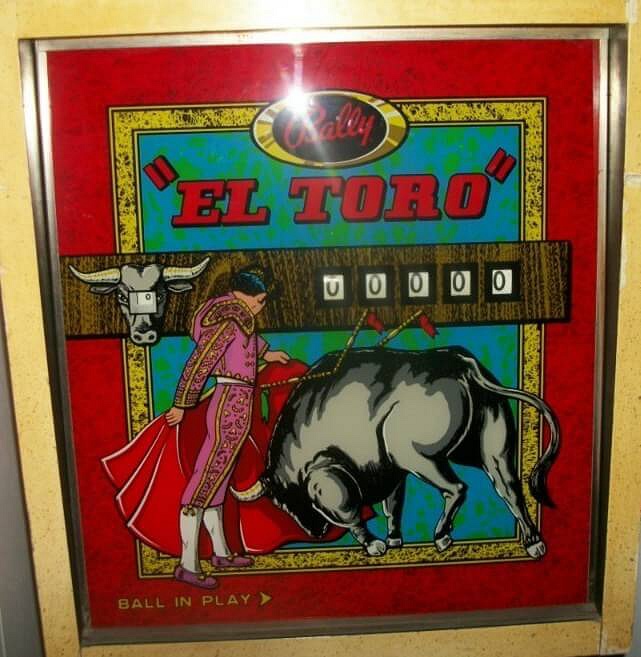
El Toro, released by Bally in 1974, stands as a quintessential example of Jim Patla’s mid-70s design philosophy, capturing the high-stakes intensity of the bullring within a classic electromechanical framework. Featuring artwork by the legendary Dick White, the machine eschews the digital complexity of modern tables for a visceral, analog experience. The playfield is defined by a balanced geometry of three pop bumpers and three mushroom bumpers, which provide the erratic, unpredictable ball movement necessary to keep players on their toes as they chase high scores on the traditional reel-based displays.
The mechanical charm of El Toro lies in its simplicity and the frantic pace dictated by its layout. With two flippers and two active slingshots, the game demands precision rather than sophisticated mode-stacking, forcing the player to master the art of the post pass and the dead-flipper trap to survive the onslaught. The mushroom bumpers, in particular, act as the centerpiece of the board; their unique shape often catches the ball in ways standard bumpers do not, sending it careening across the playfield with a distinct, clattering urgency that defines the era.
For the vintage enthusiast, El Toro is a testament to an age where production counts were limited—with only 2,065 units ever gracing arcade floors—making it a prized relic for collectors. While it lacks the deep rulesets of today’s machines, its strength lies in the pure, unadulterated tension of bullfighting-themed competition. Success on this table requires a disciplined eye for the rebound angles created by the mushroom bumpers; learning to anticipate the ball’s path off these obstacles is the primary skill-gap for anyone looking to put up a respectable score on this Bally classic.