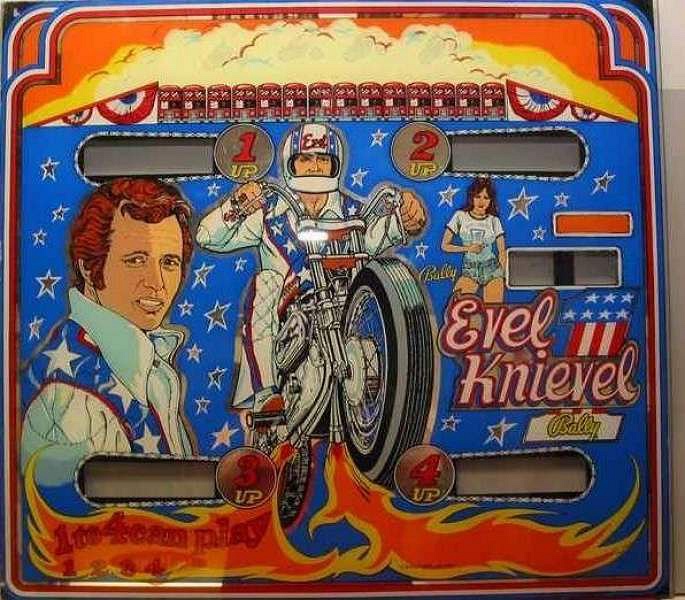
Who better to headline a pinball machine at the dawn of the solid-state age than the era’s greatest daredevil? Bally’s Evel Knievel, released in 1977, was the company’s third mass-produced solid-state pinball, arriving at the exact moment the industry was leaping from electromechanical relays to silicon — so fittingly, Bally hedged its bets and built the game in both formats. Designed by Gary Gayton with bold artwork by Paul Faris, it became one of the hottest arcade attractions of 1978, right up until a little game called Space Invaders changed everything.
True to the high-flying theme, the strategy rewards bravado tempered with caution. The lit spinners are your scoring lifeline — aim for whichever one is lit, and if neither is, knock down the drop targets to light them up. Completing those drops once awards double bonus and lights the spinners, twice earns an extra ball, and a third time lights the special, giving the game a clear, escalating ladder of risk and reward. The catch, as the playfield will teach you fast, is that going for the center standup target is a quick ticket to a drain.
A genuine piece of pinball’s transition-era history, Evel Knievel pairs an irresistible celebrity license with the simple, punchy gameplay of its time. It’s an accessible, fast, and historically significant table — a fitting tribute to a man who built his whole career on calculated risk.