
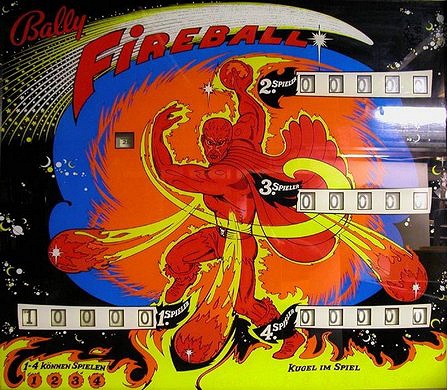
Bally’s Fireball is a landmark of electromechanical pinball — a 1972 machine from designer Ted Zale that bristled with innovation at a time when the silver ball was still finding its modern shape. Its most famous feature is the pair of “zipper flippers,” which can snap together to close the gap between them: hit the right mushroom bumper and the flippers cinch shut, sealing off the drain. Add a continuously spinning disc at the center of the playfield that flings the ball in unpredictable directions, plus genuine multiball and a captive “messenger” ball, and you have a game decades ahead of its peers.
The strategy rewards aggression up top. Players prize the high-value skill shot, plunging the ball as far up the rear of the playfield as they dare to nick the 1,000-point switches, and locking balls at every opportunity to bank those lucrative awards. Zipping the flippers shut quickly off the center mushroom bumper is the key defensive trick. Wrapped in Dave Christensen’s elaborate sci-fi artwork, Fireball was a smash that helped vault Bally to the front of the industry. Today it’s a hugely collectable classic and an essential chapter in the story of how pinball learned to thrill.