
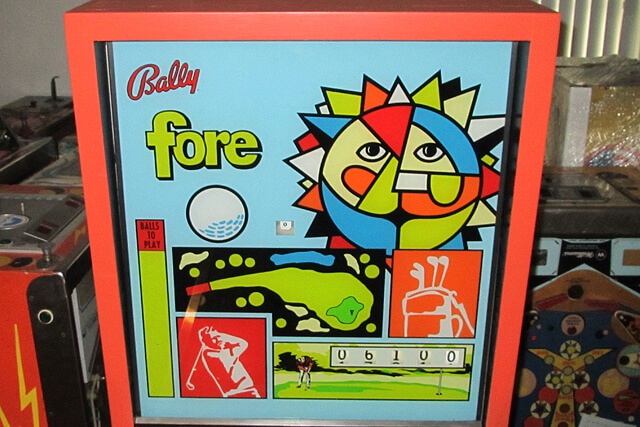
Fore, the 1971 Electromechanical rarity from Bally, stands as one of the most exclusive pieces in the history of sports-themed pinball. Designed by the legendary Jim Patla, this single-player machine translates the quiet precision of the golf course into the frantic, tactile world of relay logic and spinning score reels. With only 80 units produced, it remains a “holy grail” for collectors who appreciate the minimalist, high-stakes charm of early 70s design, where the playfield layout had to do the heavy lifting without the crutch of digital displays or complex multiballs.
The mechanical layout is surprisingly dense for an era defined by wide-open spaces, featuring a grid of 13 standup targets and 9 mini-rollover buttons that demand surgical accuracy. The gameplay revolves around navigating these obstacles, with four pop bumpers scattered across the field to keep the ball’s trajectory unpredictable, mimicking the treacherous nature of a poorly placed sand trap. A defining feature is the center up-post situated between the two flippers; it serves as a critical safety net, allowing a skilled player to nudge the game and trap the ball, turning a potential “out of bounds” into a setup for a high-scoring drive.
Strategy on Fore is all about managing the board’s congestion. Because the playfield is so heavily populated with targets and rollovers, “golfing” a high score requires methodical, rhythmic shooting rather than wild flailing. Players must treat the standup targets as fairways to be cleared, using the up-post to reset their aim whenever the ball threatens to drain. It is a quintessential test of patience and steady nerves, offering a vintage experience that rewards the disciplined player who treats every ball like a championship putt.