
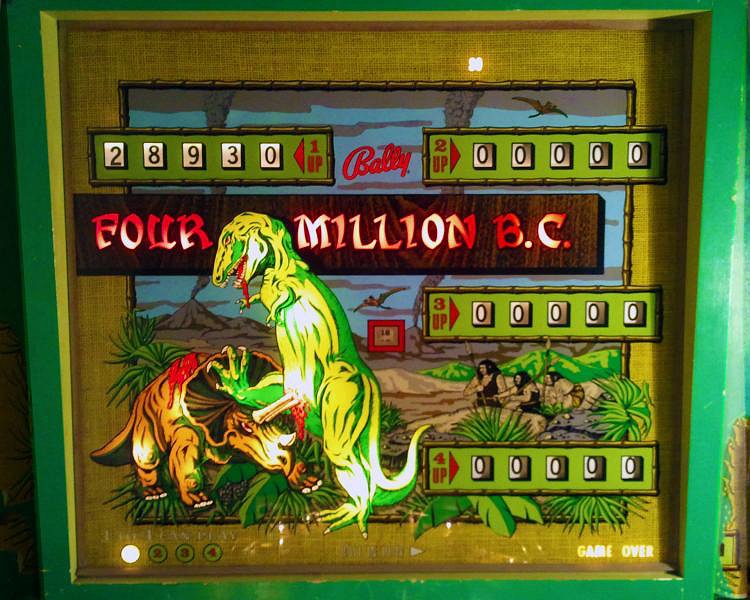
Bally’s 1971 classic, *Four Million B.C.*, remains a quintessential example of Ted Zale’s innovative mechanical design during the golden age of electromechanical machines. With a prehistoric theme rendered in Dick White’s vibrant, primitive art style, this four-player title is best remembered for its implementation of “Zipper Flippers.” These signature flippers don’t just act as bats; they physically draw together to close the gap between them, effectively turning the center drain into a safe haven where the ball can rest, allowing the player to carefully calculate their next shot.
The playfield is a clever, compact ecosystem built around the central “Volcano” and “Tar Pit” features. These serve as the game’s primary ball-locking mechanisms, creating a high-stakes environment where multiball is the ultimate objective. Strategic play revolves around the mushroom targets: hitting the “Open Flippers” mushroom forces the game to cycle the values of locked balls in the Tar Pit, while the Volcano keeps the pressure high by cycling its point awards until the ball is successfully ejected. The skill shot is equally rewarding, challenging the player to execute a perfect plunge that carries the ball to the very top of the incline and back down, racking up significant points before the action even truly begins.
Mastering *Four Million B.C.* requires a disciplined approach to the game’s unique physics. Because the flippers will snap open the moment a ball hits the trough, players must remain vigilant during multiball chaos, as the safety net of the closed flippers can vanish in an instant. The inclusion of a left outlane kicker and a reliable ball return gate gives the machine a surprisingly modern feel for its era, rewarding those who can balance the frenetic pace of the volcano locks with the tactical patience required to keep the flippers zipped. It is a prehistoric relic that proves, even decades later, that simple mechanics can provide a deep, satisfying challenge.