
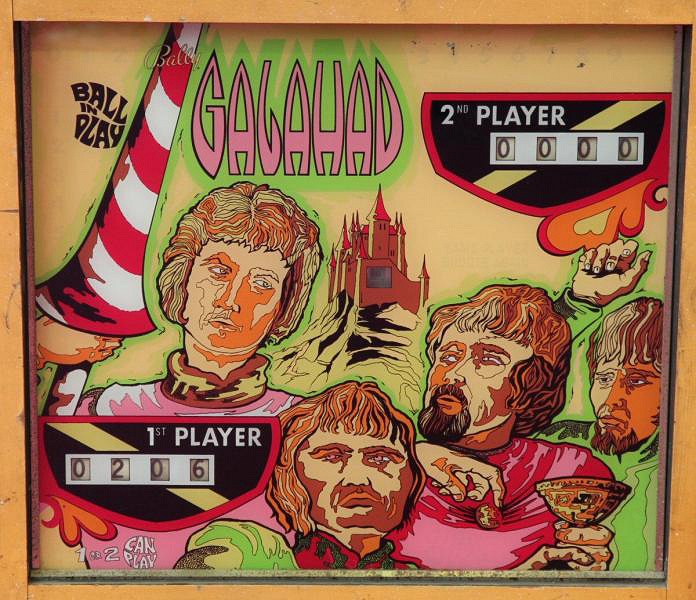
Galahad, the 1968 offering from Bally, stands as a quintessential artifact of the Ted Zale era, blending historical chivalry with the unmistakable, tactile charm of electromechanical engineering. Featuring vibrant, stylized cabinet and playfield art by Christian Marche, the machine evokes a medieval quest that feels distinctly mid-century. With only 791 units produced, this two-player EM is a rare relic for collectors who appreciate the minimalist, high-stakes architecture that defined Bally’s late-sixties output.
The playfield layout is a masterclass in Zale’s design philosophy, prioritizing precision over the cluttered complexity of modern machines. Players navigate the quest using two flippers, maneuvering the ball through a quartet of pop bumpers that demand expert nudging to keep the action alive. A defining feature of the era is the inclusion of an up-post situated between the flippers—a critical tool for skilled players to trap the ball and set up deliberate shots into the two strategically placed kick-out holes.
Tactical play on Galahad revolves around managing the three standup targets and utilizing the mini-post ball return gate to maximize ball time. Because the game relies on reel-based scoring rather than digital displays, every point feels earned, requiring a rhythmic flow to navigate the bumpers and clear the objective-based holes. It is a lean, honest machine that demands patience and a steady hand, serving as a reminder of a time when the “knight’s journey” was measured in the sharp, satisfying click of a mechanical relay.