
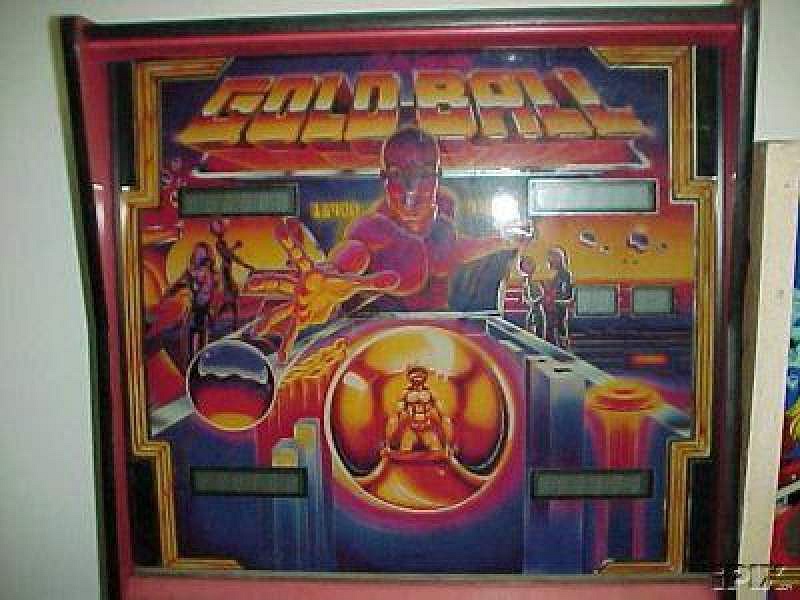
Gold Ball, released by Bally in 1983, remains one of the most intriguing experiments of the solid-state era. Designed by George Christian with a distinct fantasy aesthetic brought to life by artist Tony Ramunni, the machine eschews licensed pop culture for a high-stakes gamble centered around its namesake gimmick. While the playfield layout is relatively straightforward—utilizing a standard two-flipper configuration, a trio of pop bumpers, and a central spinning target—the mechanical heart of the machine is the ball-delivery system itself, which keeps players constantly on edge.
The true genius of the table lies in its element of surprise. At the start of a ball, the machine may randomly serve up a shiny gold ball instead of a standard steel one. When this rare orb is in play, the game’s logic shifts into high gear, tripling all scoring values across the board. It is a simple but electrifying multiplier that transforms a standard session into a frantic chase for points. Savvy players looking to maximize their performance should prioritize spelling out “GOLDBALL” while the multiplier is active, as doing so secures a lucrative streak of three consecutive gold ball modes.
With only 1,750 units produced, Gold Ball stands as a quintessential Bally collector’s piece that rewards patience and tactical lane management. The inclusion of a left crossover return lane adds a layer of depth to the ball flow, forcing operators and players alike to respect the machine’s geometry. It is a lean, mean, scoring machine that proves you don’t need a complex array of toys to create an unforgettable arcade experience—sometimes, all you need is a bit of luck and the promise of a golden opportunity.