
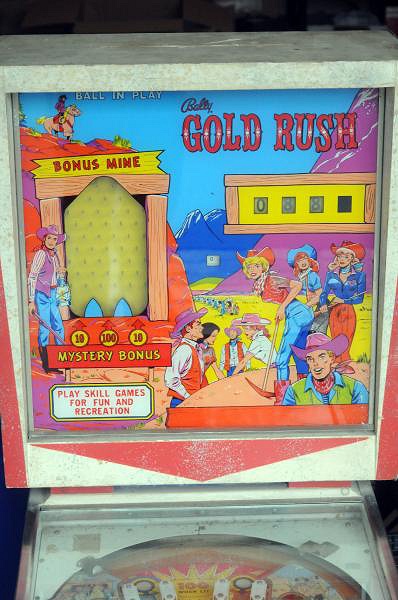
Gold Rush, released by Bally in 1971, stands as a quintessential piece of electromechanical history designed by the prolific Ted Zale. Immersing players in the gritty, high-stakes atmosphere of the American West, this single-player machine leans heavily into the prospecting aesthetic that defined the era’s arcade culture. While it lacks the digital flair of modern tables, its charm lies in its tactile, mechanical soul, highlighted by a distinctive backbox animation that captures the frantic energy of a frantic search for fortune.
The playfield is a dense, unconventional landscape packed with seven mushroom bumpers—a departure from the standard pop bumper layouts of the time—which turn every shot into a chaotic, unpredictable scramble. Zale’s design forces players to navigate a tight configuration of four pop bumpers and a strategic kick-out hole, demanding precision over raw power. A standout feature is the right outlane ball return gate, a merciful inclusion that offers a second chance to those whose luck in the mines has momentarily run dry.
For the collector or enthusiast, Gold Rush is more than just a game of chance; it is a mechanical puzzle that rewards patience and rhythm. With only 1,750 units produced, it remains a rare, sought-after relic for those who appreciate the raw, unadulterated feedback of an EM machine. Its gameplay is straightforward yet demanding, serving as a reminder of a time when pinball design was less about complex rule sets and more about the simple, exhilarating pursuit of hitting the motherlode.