
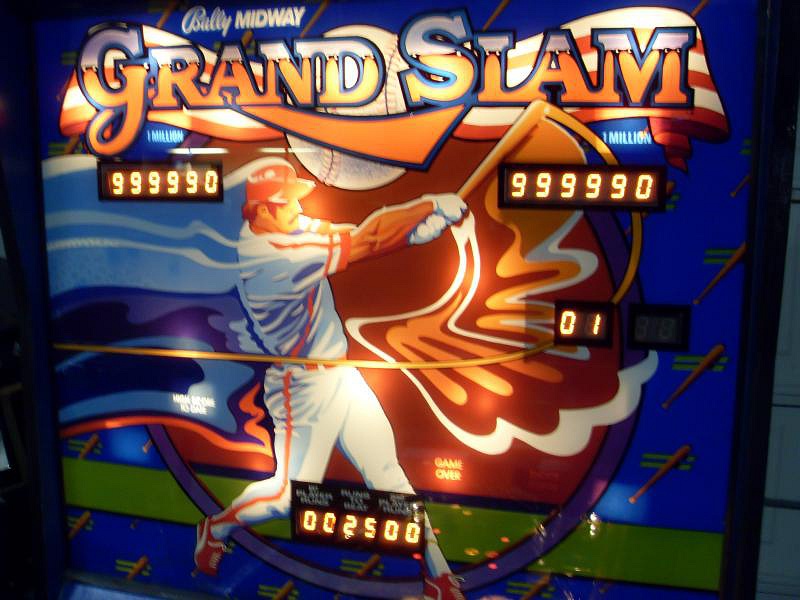
Grand Slam, released by Bally in 1983, serves as a quintessential diamond-themed classic from the golden age of solid-state machines. Designed by Greg Kmiec with striking artwork by Doug Watson, the table captures the spirit of the ballpark through a clever playfield layout that utilizes three flippers to navigate a dense network of targets. The machine is anchored by a five-bank of “flyaway” targets that mimic the intensity of a pitcher-batter duel, while the inclusion of a spinning target and four star rollovers keeps the pace as frantic as a double play in the bottom of the ninth.
Mastering the scoring mechanics requires a disciplined approach at the plate. Players should prioritize the “HOMER” target bank, which rewards tactical precision; hitting these targets in the correct sequence nets a significantly higher value than erratic play, ultimately allowing you to collect the jackpot lit at the center of the baseball diamond. To truly rack up the big points, focus on knocking out the “STEAL” lights via the standup targets and inlanes to climb the bonus multiplier ladder, as runs are the primary engine for building a massive end-of-ball bonus.
For those looking to exploit the playfield’s geometry, there is a slick secret to be found in the upper left saucer. When the ball kicks out to the upper flipper, a quick tap of the left flipper button allows you to loop the ball back toward the top of the playfield, creating a repeatable scoring rhythm. With only 1,000 units produced, Grand Slam remains a sought-after piece of sports-themed history that demands both patience and a sharp eye for target sequencing to secure the win.