
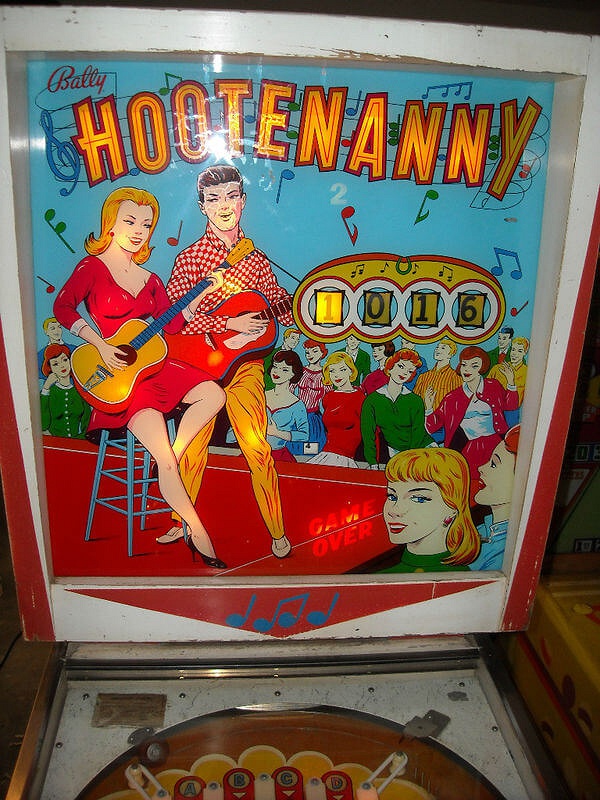
Hootenanny, released by Bally in 1963, stands as a quirky, mid-century relic of the folk music craze designed by the legendary Ted Zale. A single-player electromechanical machine, it captures the spirit of the era with a thematic focus on singing and dancing, stripped of the complex toys that would define later decades. Instead of ramps or magnets, the gameplay relies on the tactile, frantic energy of three pop bumpers and a singular, eccentric mushroom bumper that anchors the playfield, demanding precise nudging and rhythmic control to navigate the cluttered landscape of rollover buttons and standup targets.
The machine is a masterclass in Zale’s minimalist design philosophy, forcing players to focus on the raw geometry of the playfield rather than flashy, modern gimmicks. With only 1,051 units produced, it remains a rare find for collectors who appreciate the charm of reel-based scoring and the unpredictable bounces of early sixties engineering. Success on Hootenanny requires a disciplined approach to ball control; because the layout centers on those volatile bumpers and a trio of slingshots, the game is less about completing long-form missions and more about managing the chaos of a high-speed, unpredictable rebound environment. It is a nostalgic, rhythm-focused experience that serves as a reminder of pinball’s humble, energetic roots.