
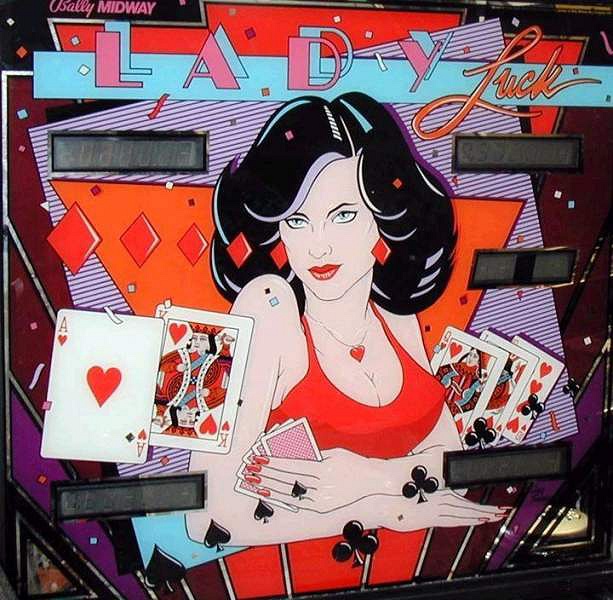
Lady Luck, released by Bally in 1986, is a rare gem of the solid-state era, with only 500 units ever produced. Designed by George Christian with iconic card-themed artwork by Greg Freres, the table leans heavily into a classic poker aesthetic that feels like a high-stakes night at a vintage casino. The playfield is a focused, mechanical affair featuring three flippers and a strategic layout centered around a five-bank drop target array and a pivotal captive ball, all designed to test your precision under pressure.
The gameplay loop is deceptively simple but rewards aggressive, calculated shooting. The captive ball acts as your engine for progression, incrementally boosting the spinner value up to a maximum of 10,000 points. The real magic, however, happens when you clear the card drops and hit the side targets; this sequence triggers a timed 10x playfield multiplier. If you’ve managed to max out your spinner value beforehand, each spin can rake in a staggering 100,000 points, turning a standard shot into a massive score-builder.
For those looking to master the table, keep a sharp eye on the top lanes. Completing these in their rolling sets is the primary path to building your bonus multiplier, and the best part is that this progress carries over from ball to ball, allowing you to cultivate a massive end-of-ball payout. While Lady Luck might be a elusive find for most collectors, its tight design and the high-reward synergy between the spinner and playfield multiplier make it a quintessential Bally experience for any player who enjoys chasing big points through disciplined, repetitive execution.