
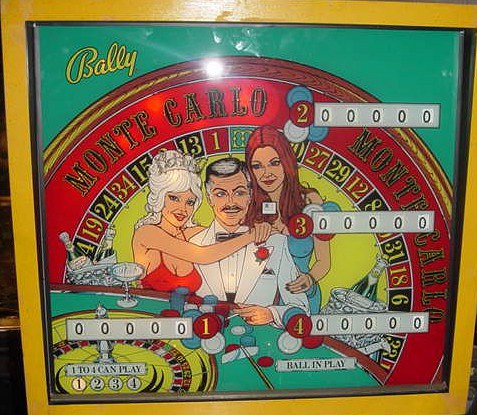
Monte Carlo, released by Bally in 1973, remains a definitive slice of golden-era electromechanical design. Penned by Jim Patla with the unmistakable, high-energy aesthetic of artist Dave Christensen, this four-player machine captures the high-stakes allure of the casino floor. The playfield is a dense, intricate grid of ten mini-rollover buttons, creating a frantic board-game feel that demands precision shooting to light up the scoring sequences.
The mechanical layout is deceptively simple yet punishingly effective. It utilizes two traditional flippers supported by an up-post positioned between them, a classic Bally inclusion that serves as a vital safety net for players attempting to survive the chaotic rebounds of the three pop bumpers and two mushroom bumpers. Two kick-out holes provide the necessary risk-reward tension, while the interplay between the upper and lower gates forces the ball into unpredictable trajectories.
For those looking to master the table, the strategy revolves around navigating the rollover clusters. Given the game’s reliance on EM-era reel scoring, maintaining control and avoiding the side drains is paramount; the mushroom bumpers act as volatile wildcards that can either extend your ball time or send the sphere rocketing toward the outlanes. With over 5,000 units produced, Monte Carlo stands as a testament to the enduring appeal of pure, mechanical gambling-themed pinball, offering a tactile experience that remains as challenging today as it was in the seventies.