
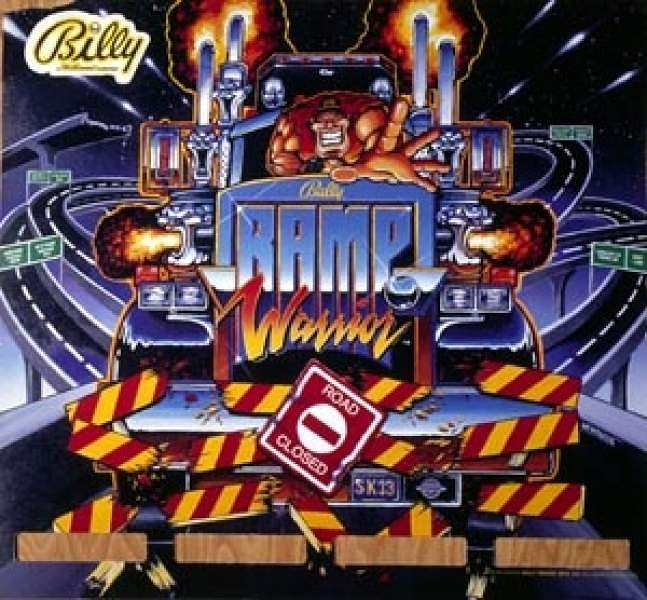
Bally’s *Ramp Warrior* stands as one of the true unicorns of the solid-state era. Designed by the duo of Dan Langlois and Steve Kirk, this truck-driving-themed machine is shrouded in mystery, with only three confirmed units ever produced. Its rarity makes it a holy grail for collectors, but beyond the exclusivity, the game reflects a rugged, high-stakes aesthetic brought to life by the sharp art direction of Pat McMahon. It is a machine that feels like a relic of a lost era of arcade development, defined by its stark, alphanumeric display and a layout that demands precision behind the wheel.
The gameplay is anchored by a mechanical focus on navigation and speed, fitting for a title centered on the open road. The board features a grid-based progression system that tasks the player with mastering the playfield’s geometry. To make headway, you must clear the six blue-arrowed standup targets located in the center of the field. Successfully knocking these out lights one of the four available ramps, which acts as a shortcut to completing a “CITY” line on your grid. It is a classic, high-pressure objective that forces you to balance accuracy with the frantic pace of an arcade classic.
For those lucky enough to encounter one of these elusive machines, the strategy is straightforward but punishing: prioritize the center bank. By focusing your fire on those six standup targets, you turn the game from a chaotic drive into a calculated route, bypassing the standard grind to quickly fill your grid. *Ramp Warrior* may be a ghost in the annals of pinball history, but its mechanics offer a glimpse into the experimental, target-heavy design philosophy that made Bally a titan of the seventies and eighties.