
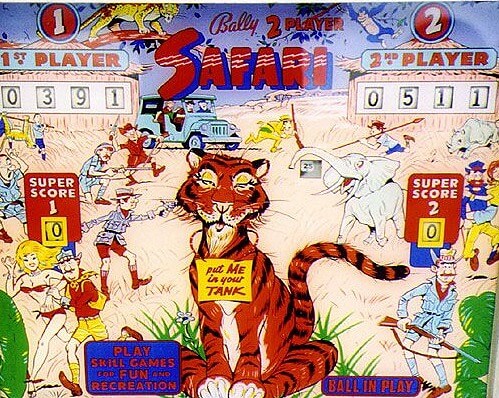
Safari, a 1969 release from Bally, stands as a quintessential example of Ted Zale’s design philosophy during the late EM era. With a theme centered on the rugged adventure of a big-game hunt, the playfield is dominated by a quartet of mushroom bumpers that demand precision and quick reflexes. These distinctive, low-profile targets act as the focal point of the board, forcing players to navigate tight corridors and manage the unpredictable ricochets that define this fast-paced, two-player machine.
The gameplay experience is notoriously unforgiving, characterized by short ball times and a layout that punishes hesitation. Because the ball rarely climbs back up the playfield once it passes the flippers, success depends on maintaining control and keeping your flippers held to guard the gaps. A crucial skill-shot opportunity exists on the initial plunge: by banking the ball off the right slingshot, you can catch the center lane for a quick 100-point reward. To maximize your score, focus on spelling out “TIGER” while relentlessly hammering the mushroom bumpers and the upper right lane.
With only 1,100 units produced, Safari is a rare, high-tension challenge that rewards those who can master its unforgiving geometry. The inclusion of a right outlane ball return gate offers a rare lifeline, but don’t count on it to save your game—this is a title that demands total focus and aggressive play from the moment the plunger is released. For the vintage enthusiast, Safari offers a raw, unfiltered look at the mechanical intensity that made Bally machines the gold standard of the late sixties.