
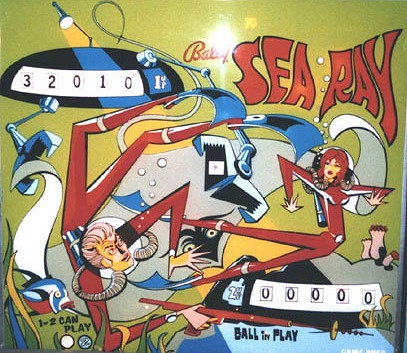
Sea Ray, the 1965 underwater odyssey from Bally, stands as a quintessential example of Ted Zale’s penchant for high-risk, high-reward mechanical design. Featuring vibrant, stylized aquatic artwork by Christian Marche, this two-player EM invites you into a world of spear fishing and deep-sea exploration. The playfield is defined by an aggressive layout of three mushroom bumpers and three traditional pop bumpers, creating a chaotic, unpredictable ball path that demands constant attention. With its iconic center-post between the flippers and a specialized right-side ball return gate, the machine is built to keep the action moving, even if that motion often leads toward the outlanes.
The strategic heart of the game revolves around managing the yellow mushroom bumper located in the center of the field. Every 10-point switch you hit cycles the potential value lit beneath this bumper, turning a simple target into a high-stakes gamble. While it is tempting to chase the maximum 5,000-point reward, the proximity of the outlanes makes this a dangerous pursuit that can end a run in seconds. Meanwhile, savvy divers will focus on the standup targets and top white rollovers to build a massive bonus, which is then harvested by navigating the ball into the saucer or the right-side lane.
Mastering Sea Ray requires a disciplined approach to the playfield’s geometry. The upper left chicane lane is a critical path for lighting features, and knowing when to hunt for points versus playing for the bonus is the difference between a high score and a quick drain. Despite its age, Sea Ray remains a masterclass in Zale’s design philosophy, forcing players to weigh the allure of a big payout against the ever-present threat of the deep-sea abyss. It is a deceptively simple, fast-paced challenge that captures the tension of a spear-fishing expedition on every plunge.