
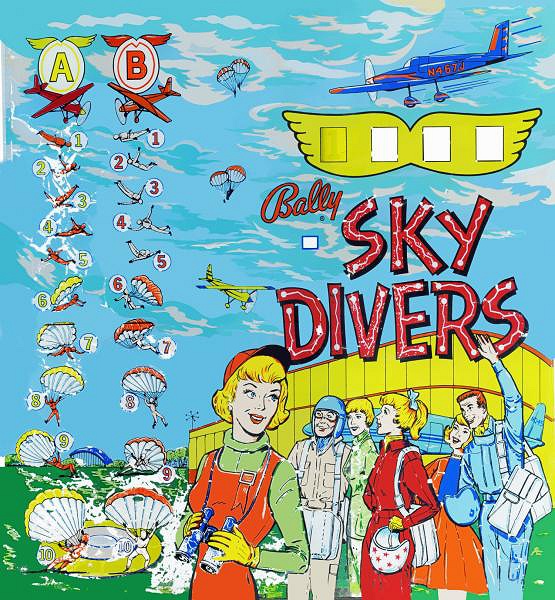
Sky Divers, released by Bally in 1964, stands as a quintessential example of Ted Zale’s knack for high-energy, mid-sixties electromechanical design. Centered on the adrenaline-fueled theme of high-altitude parachuting, this single-player machine strips away the modern clutter of ramps and magnets, opting instead for a fast-paced, geometry-heavy playfield that demands precision. With a production run of 2,250 units, it remains a sought-after piece for collectors who appreciate the tactile, rhythmic clatter of score reels and the raw, unadulterated speed characteristic of the era.
The mechanical landscape of Sky Divers is defined by a chaotic mix of bumper types that force the ball into unpredictable trajectories. Zale packed the playfield with a trio of traditional pop bumpers alongside a set of three mushroom bumpers, creating a “bouncing” environment that tests a player’s ability to nudge and control the ball. The inclusion of three rollover buttons adds a layer of target-shooting pressure, while the upper free ball gate provides a classic reward for those skilled enough to navigate the upper reaches of the board.
Strategy on a machine like Sky Divers is less about deep rulesets and more about mastering the flow of the playfield to keep the ball away from the outlanes. Because the game lacks modern ball-save technology, success relies on aggressive flipper timing and utilizing the mushroom bumpers to cycle the ball back toward the center of the action. It is a game of rhythm and reflexes—a nostalgic, soaring experience that captures the dangerous, free-falling spirit of its namesake sport through simple, yet punishing, mechanical execution.