
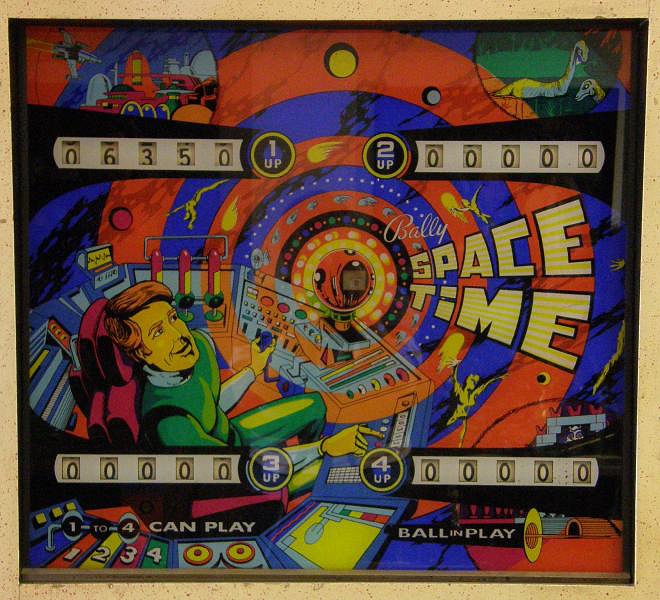
Space Time, released by Bally in 1972, stands as a quintessential artifact of the early seventies electro-mechanical era, showcasing the distinct design sensibilities of Jim Patla and the iconic, high-contrast artwork of Christian Marche. With a theme rooted in the space-age optimism of the time, the machine transports players into a retro-futuristic void where the primary objective is navigating a unique “tunnel” feature. This 3D lower playfield element, complete with its own shifting light show, serves as the heart of the game, demanding precision timing and a steady hand to master.
The gameplay loop centers on managing the tunnel’s scoring potential. A well-timed plunge is essential, as the player aims to stop the tunnel’s cycling values at the coveted 4,000 or 5,000 mark. Successfully striking the center target captures this value and triggers the rise of the center post, a vital defensive tool for prolonging ball time. Players must balance their shots carefully; while the right side of the playfield is dedicated to resetting the plunge and harvesting tunnel points, the left side offers a more high-stakes path with the potential to earn an extra ball.
True to its vintage Bally roots, the game features a pair of responsive flippers, four pop bumpers, and two kick-out holes that keep the action frantic and unpredictable. The center drain is notoriously hungry, often requiring a subtle touch on the lockdown bar to nudge the ball away from the abyss. With 5,000 units produced, Space Time remains a beloved classic for those who appreciate the tactile, analog charm of reel-based scoring and the challenging, rhythmic flow of early solid-state precursors.