
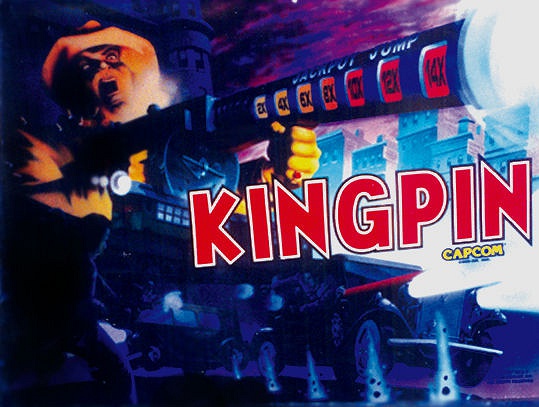
Kingpin, released by Capcom in 1996, remains one of the most enigmatic “what-ifs” in the history of the hobby. Designed by Mark Ritchie—a legend known for his ability to craft tight, flowing playfields—this mob-themed title stands as a monument to a company that exited the pinball market just as they were hitting their stride. With a production run of only nine confirmed units, Kingpin is the ultimate holy grail for collectors, representing a high-water mark for the manufacturer’s technical capabilities and artistic direction.
The playfield design is a masterclass in layout efficiency, featuring the signature smooth geometry that defined Ritchie’s best work. The game leans heavily into its gritty, cinematic aesthetic, with Stan Fukuoka’s evocative art package capturing the tense atmosphere of mid-century crime drama. Mechanically, the table is defined by its clever ramp integration; the inclusion of spinners at the ramp entrances adds a tactile, aggressive feedback to every shot, rewarding players who can maintain the momentum of a high-speed ball path. Chris Granner’s immersive soundscape and score elevate the experience, grounding the chaotic, high-stakes gameplay in a dark, atmospheric world of cops and criminals.
Mastering Kingpin requires a disciplined approach to the ramps, as the layout demands precise accuracy to maximize the scoring potential hidden within its software. While the machine is practically invisible in the wild, its reputation for deep, satisfying rules and buttery-smooth shots persists among those fortunate enough to have stepped up to the lockdown bar. It is a bittersweet masterpiece—a game that proved Capcom was capable of competing at the highest level, only to vanish into the shadows of pinball history almost as soon as it arrived.