
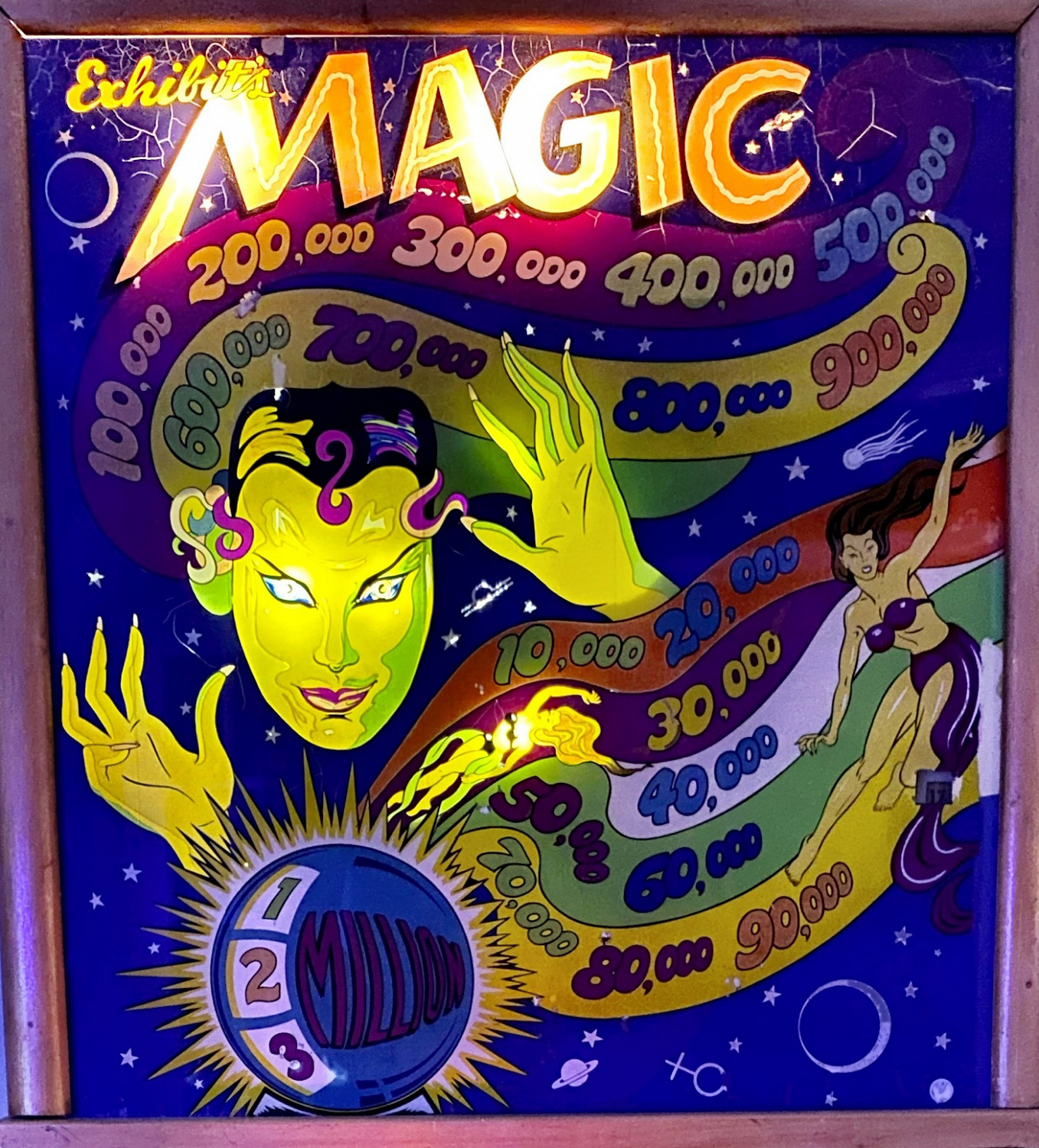
Magic, released by Exhibit, stands as a quintessential relic of the mid-century electromechanical era. Eschewing the complex narratives and elaborate multi-ball mechanics that would define later decades, this machine captures the pure, stripped-back essence of vintage arcade play. With its simple light-based display and a focus on straightforward, high-score competition, it serves as a reminder of a time when the tactile satisfaction of a steel ball hitting a post was the only spectacle required to draw a crowd.
The design philosophy behind Magic is rooted in accessibility and value, famously offering five balls for a mere nickel. This economy of play encouraged quick, repetitive sessions that prioritized reflexes over deep rulesets. Because it lacks the intricate toy-driven geometry of modern tables, success on Magic relies entirely on mastering the game’s unique physics and timing. It remains a fascinating study in minimalist design, proving that even without digital scoring or complex ramps, the fundamental challenge of keeping the ball in play is a timeless pursuit.