
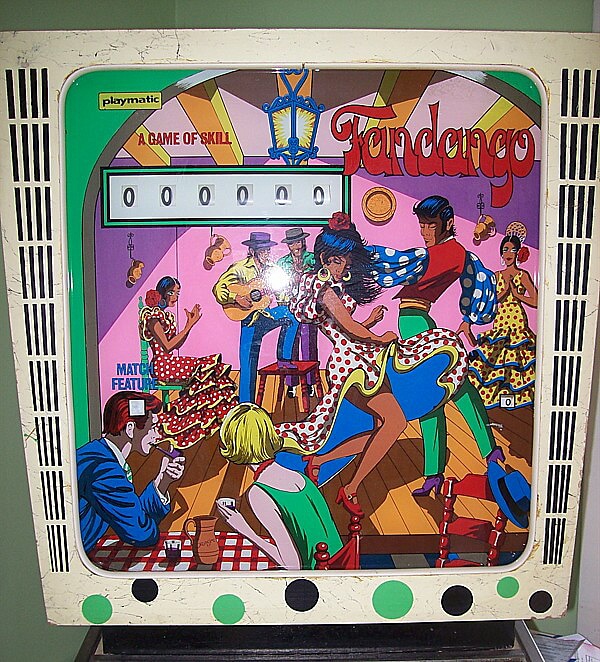
Fandango, produced by the Spanish manufacturer Playmatic, is a charming slice of mid-century arcade nostalgia that captures the rhythmic energy of its titular dance. As an electromechanical machine, it eschews digital wizardry for the tactile satisfaction of spinning reels and mechanical scoring. The playfield is a study in classic geometry, utilizing a pair of flippers to navigate a layout punctuated by two pop bumpers and a singular, strategic mushroom bumper that demands precise nudging and anticipation.
The design emphasizes flow and target precision, featuring a collection of six standup targets that invite the player to chase high-score sequences. One of the machine’s most distinct characteristics is found on the left side of the playfield, where parallel lanes of serial rollovers offer a rewarding challenge for players looking to rack up bonuses through consistent ball pathing. A well-placed kick-out hole serves as the game’s primary objective magnet, frequently pulling the ball into play to reset the action or trigger scoring pulses.
For those tackling this vintage gem, the key to success lies in mastering the relationship between the mushroom bumper and the serial rollovers. Because the game lacks the complex ball-save features of modern pins, maintaining control at the flippers is paramount; players should focus on clearing the standup targets to build their multiplier before committing the ball to the high-risk rollover lanes. Fandango remains a quintessential example of Playmatic’s ability to turn simple, elegant mechanics into a fast-paced, rhythmic challenge that feels as lively as the dance that inspired it.