
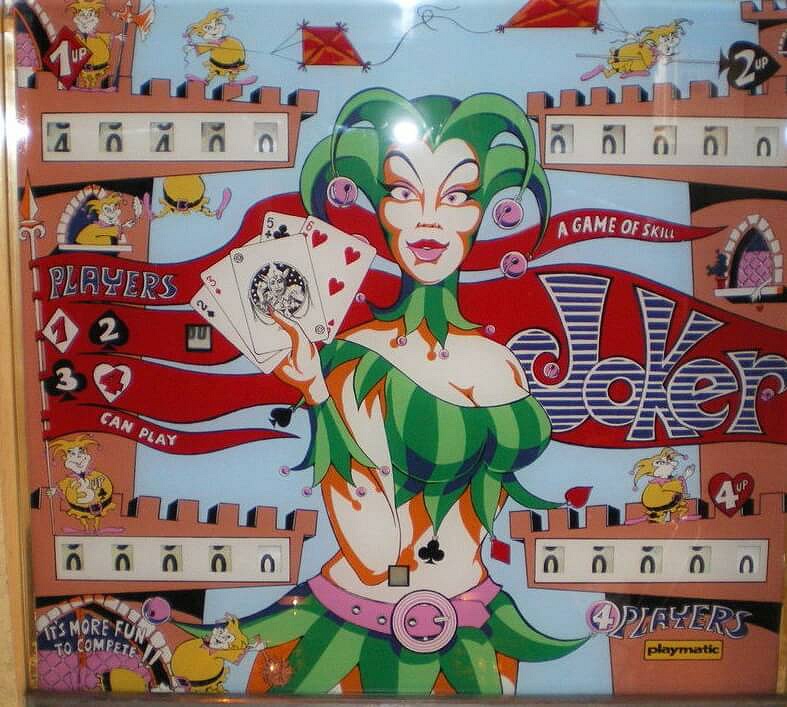
Joker, released by the Spanish manufacturer Playmatic, serves as a quintessential example of the mid-70s electro-mechanical era. With its classic playing card theme, the machine leans into the familiar aesthetic of the casino floor, utilizing traditional reel-based scoring to track the progress of up to four players. While it lacks the complex multi-ball mechanics of later decades, Playmatic’s design philosophy here focuses on the rhythm of the game, relying on a balanced layout of three pop bumpers and two active slingshots to keep the ball in constant, unpredictable motion across the playfield.
The mechanical soul of the machine is defined by its strategic simplicity and the inclusion of unique aerial spinning posts. These features demand precision, as they act as erratic gatekeepers that can either sustain a rally or send the ball careening toward the outlanes. A solitary standup target and a well-placed kick-out hole provide the primary objectives for the player, rewarding accurate shooting with the high-score gratification that only vintage EM machines can provide. It is a no-frills, tactile experience that captures the essence of classic arcade gaming, where the challenge lies in mastering the physics of the playfield rather than navigating deep rulesets.