
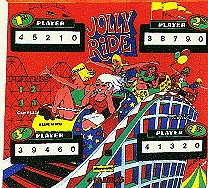
Jolly Ride, a 1970s relic from the Spanish manufacturer Playmatic, captures the whimsical, neon-soaked nostalgia of a classic amusement park. As an electromechanical machine built for a four-player field, it eschews digital complexity for the tactile charm of spinning mechanical reels and the rhythmic clicking of a relay-driven logic board. The theme is pure carnival energy, translating the kinetic thrill of a roller coaster into a compact, traditional playfield layout that demands precision over modern gimmickry.
The mechanical architecture is intentionally lean, centered around two flippers that must navigate the ball through a gauntlet of three pop bumpers. These bumpers act as the primary engine for scoring, acting as the “thrill ride” of the playfield by ricocheting the ball into unpredictable paths. A single well-placed kick-out hole serves as the game’s focal point, rewarding players who can accurately trap and aim their shots to capitalize on the park-themed scoring objectives.
Mastering a machine like Jolly Ride requires a shift in mindset compared to contemporary titles; without the safety net of ball saves or complex multi-ball modes, the game relies heavily on dead-passing and controlled flipper work. Because the scoring is tied to the physical movement of the reel units, players should focus on keeping the ball in the upper third of the playfield near the bumpers to maximize point accumulation. It is a quintessential example of mid-century European design, proving that a simple, well-maintained set of bumpers and a single kick-out hole can still provide a frantic, high-stakes experience.